


Plug and Play For Earth Science
A Free GPS Data Processing and Data Products System
Citation:
- Henceforth please use the following for citation of data products obtained on our web site:
-
- Blewitt, G., W. C. Hammond, and C. Kreemer (2018), Harnessing the GPS data explosion for interdisciplinary science, Eos, 99, https://doi.org/10.1029/2018EO104623.
Access GPS Time Series:
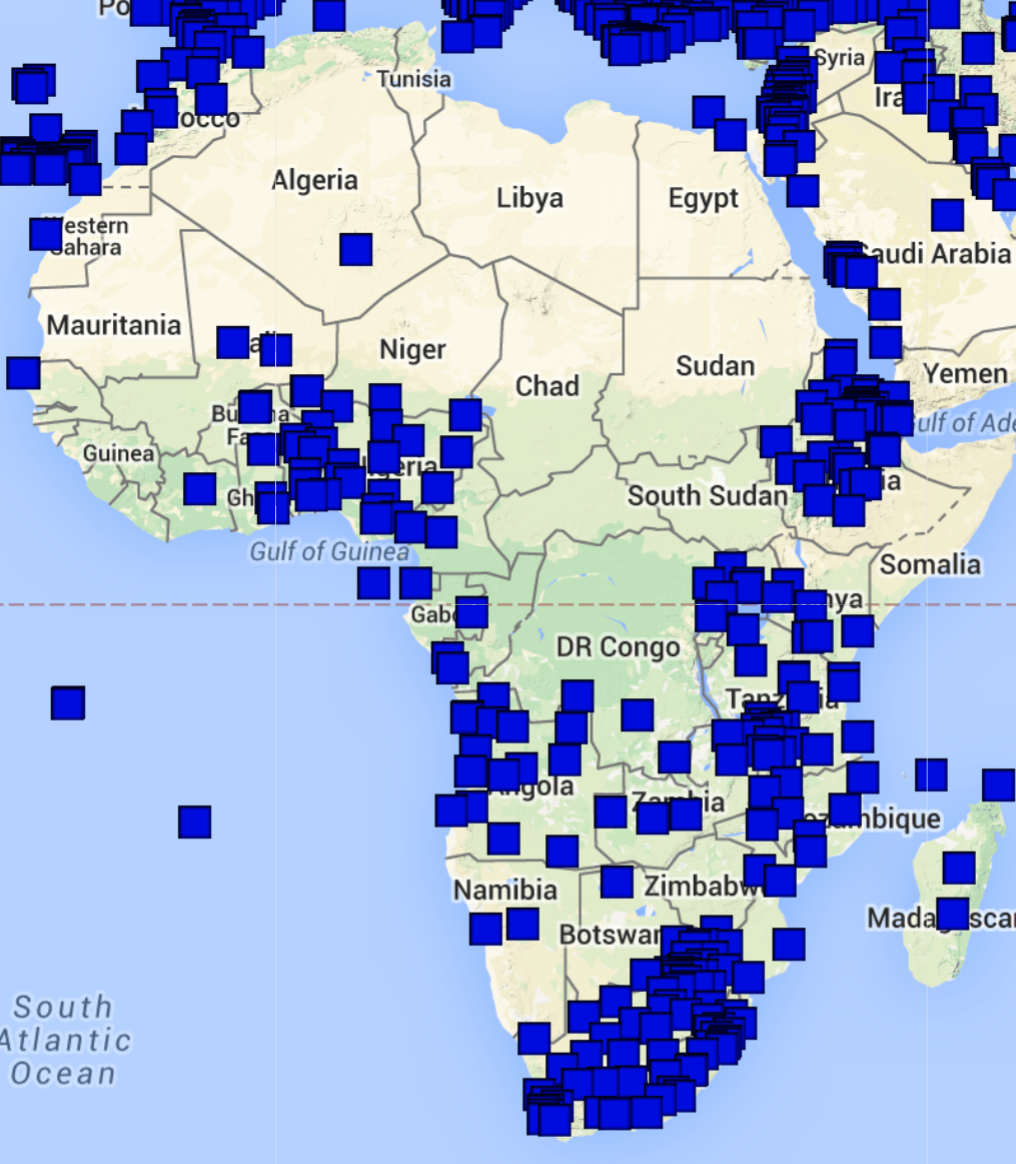
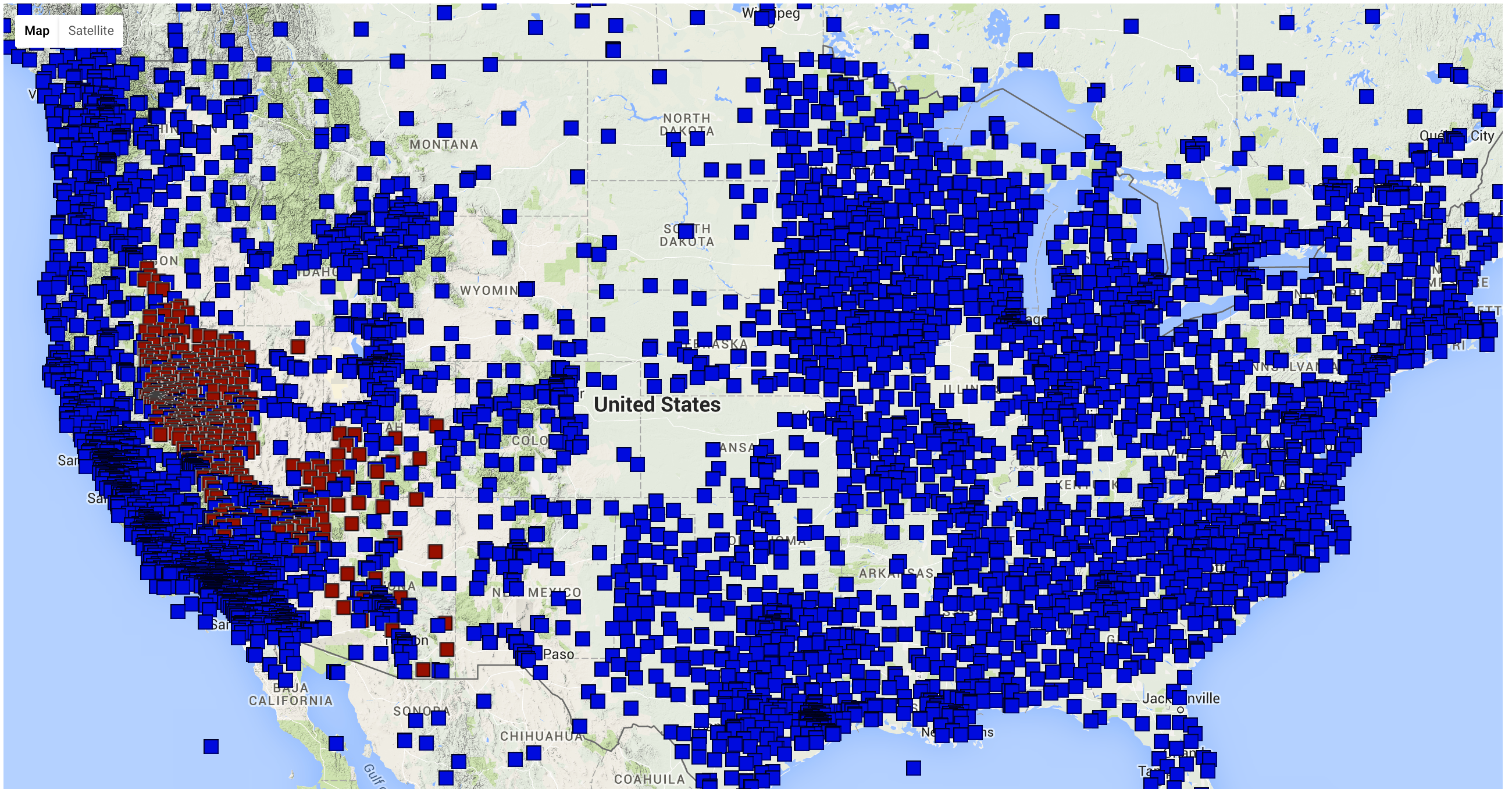
Graphical MAP BROWSE with links to station pages.
Find links to station pages and metadata using station name lists and/or text files:
- Stations with final solutions (24 hours sample rate, ~2 week latency): ( HTML / TXT )
- Stations with rapid solutions (24 hours sample rate, 24 hour latency): ( HTML / TXT )
- Stations with rapid solutions (5 minute sample rate, 24 hour latency): ( HTML / TXT )
- All time series are provided in a global (IGS20) reference frame and in a selection of tectonic plate frames. The tectonic plate frame time series differ from the IGS20 only in their horizontal trends, the rate predicted for plate rotation at the station's location has been subtracted. The vertical time series are identical.
Go directly to a station's page:
- https://geodesy.unr.edu/NGLStationPages/stations/<ssss>.sta
- where <ssss> is the station 4-character ID (use caps).
Find/Access stations and data using UNAVCO web services
Time series files direct access:
Here <ssss> is the station 4-character ID (use caps),
and <plate> is one of: AF, AN, AR, AU, BU, CA, CO, EU, IN, MA, NA, NB, NZ, OK, ON, PA, PM, PS, SA, SB, SC, SL, SO, SU, WL, which designates which plate the station is on or near.
- tenv3 format: https://geodesy.unr.edu/gps_timeseries/tenv3/IGS14/<ssss>.tenv3
- tenv format:. tenv is a simpler format with fewer columns than .tenv3 and is used as input into the MIDAS software.
- xyz format: https://geodesy.unr.edu/gps_timeseries/txyz/IGS14/<ssss>.txyz2
- File formats: README xyz and README tenv3 and README tenv.
or in a tectonic plate frame:
https://geodesy.unr.edu/gps_timeseries/tenv3/plates/<plate>/<ssss>.<plate>.tenv3
Time Series Plot Files:
- The best way to access plots of all available time series are by visiting the station pages.
- Plots can also be accessed directly if the station 4 character ID and desired and the reference frame are known, e.g.:
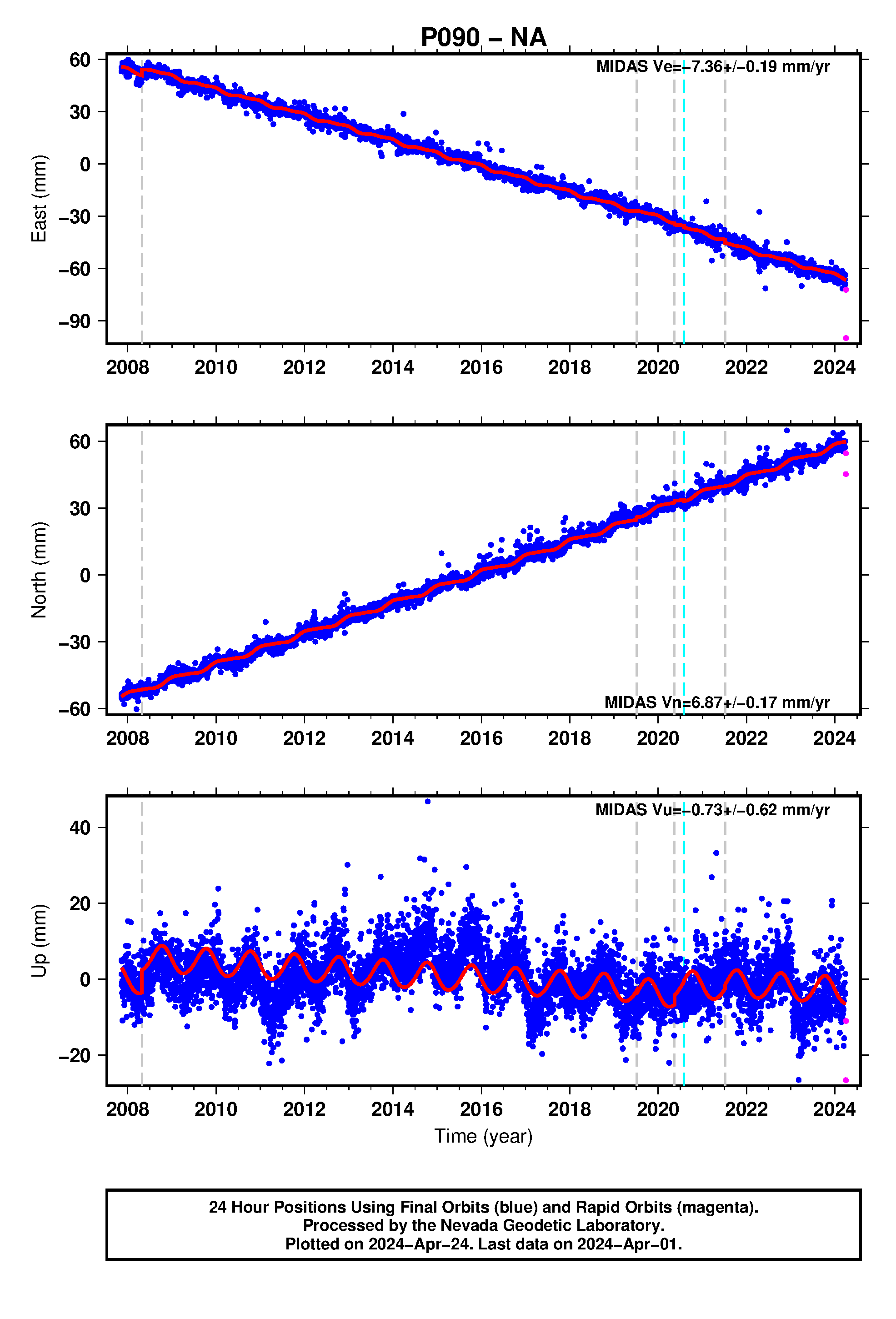
- For station P090 solutions in the NA reference frame are plotted at:
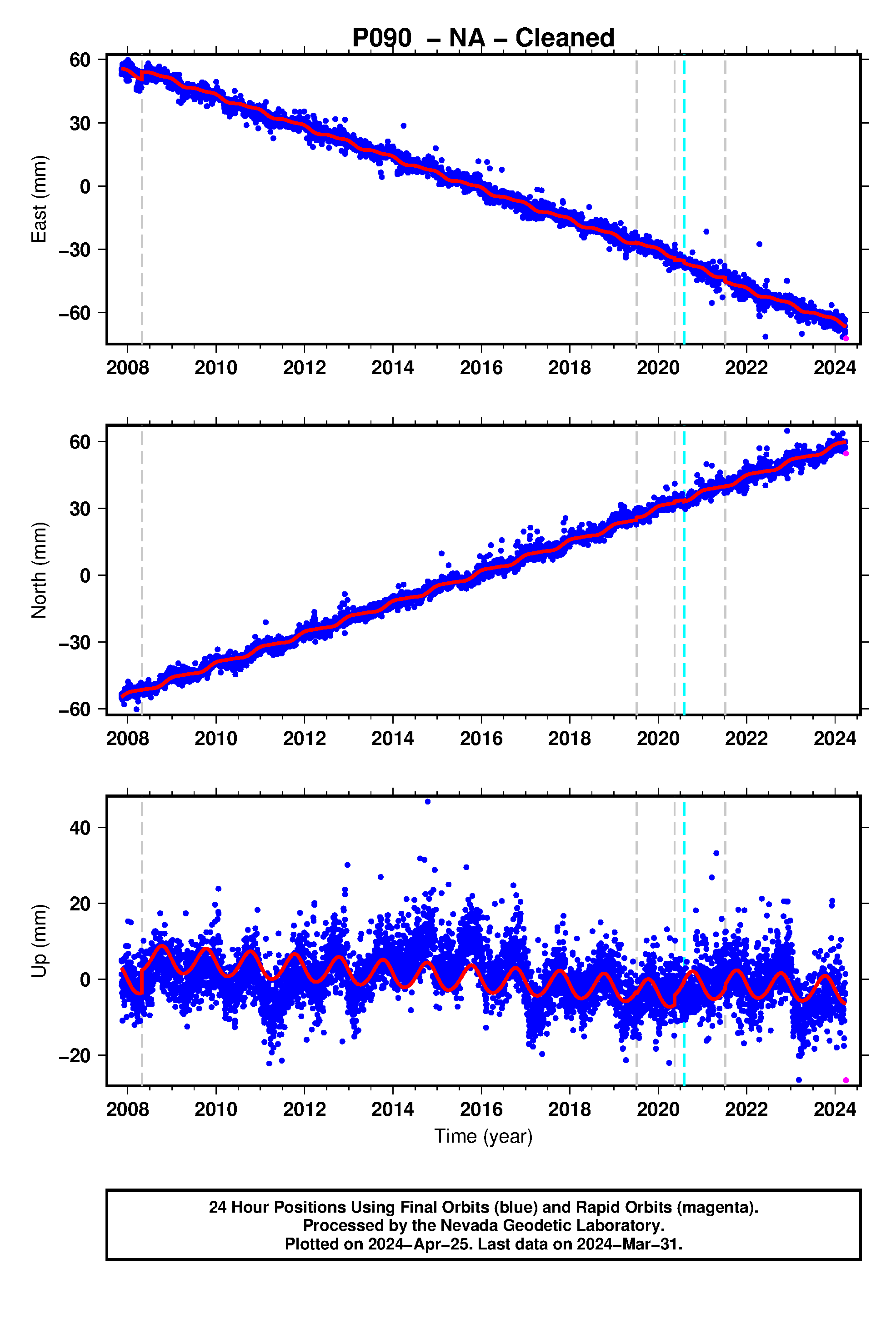
- "Cleaned" time series (outliers removed) are also available, e.g.:
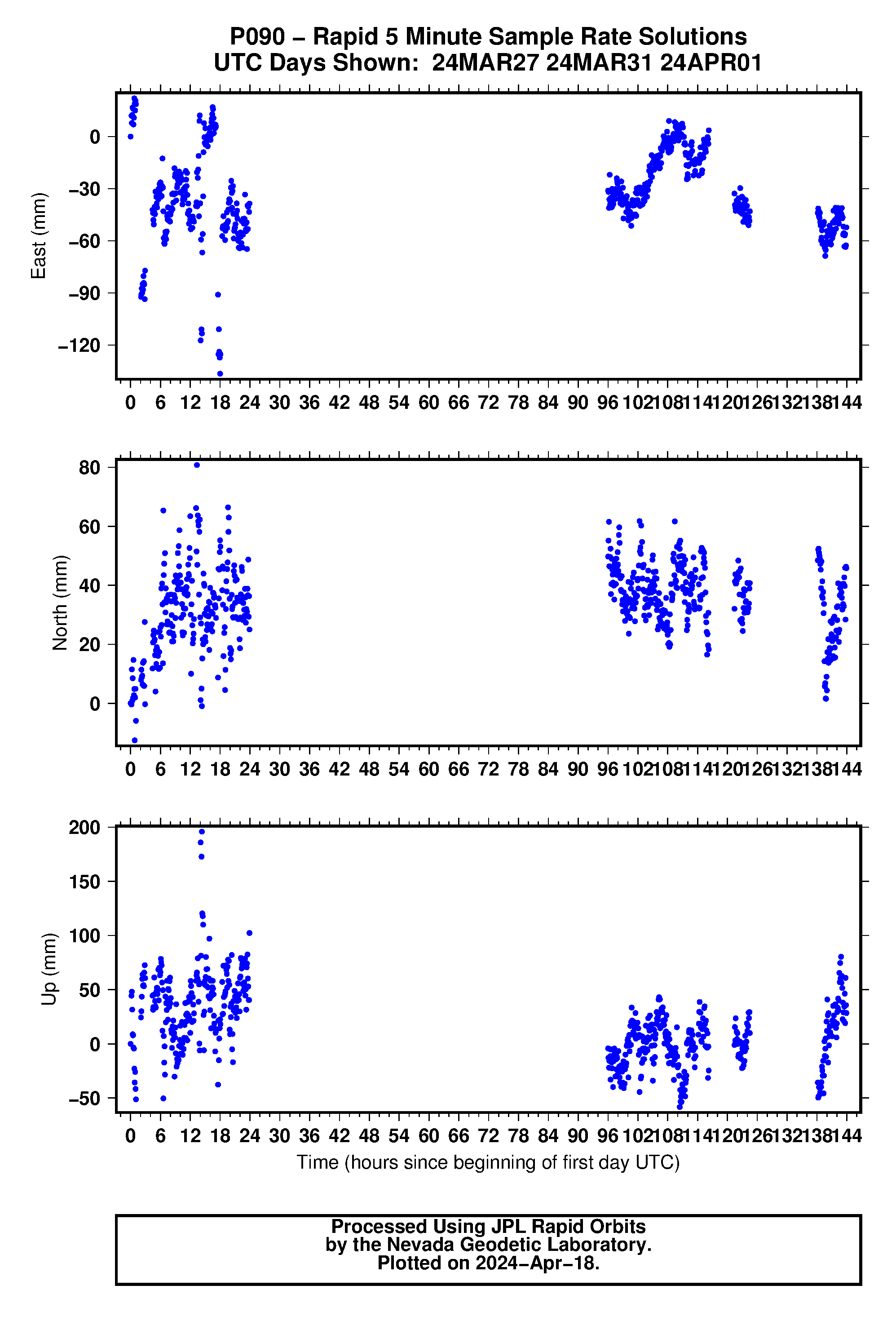
- For 5 minute rapid plots:
Velocity Fields:
- MIDAS velocities are provided for all stations with over 1 year of data. Files are provided in all of the reference frames:
Steps Database:
- File includes known equipment change events and potential earthquake steps
Data Processing Quality Assurance Files:
-
Useful for assessing solution quality and debugging issues with processing
- Example: the .tar file of all QA files for site P090 is available at: https://geodesy.unr.edu/gps_timeseries/qa/P090.qa.gz
- Detailed Documentation of the QA files
Decimal Year Convention
- Translation file (text with DDMMMYY yyyy.yyyy)
- Explanation of the convention
Access Using Your Own Software and Workflow
- Most data products (e.g. time series, summary files, steps) are available as text files and are updated daily to weekly.
- In many cases files are machine readable, and can be obtained using wget/curl commands in scripts for incorporation into your local analyses.
Troposphere Products
- To make updating and transfer managable the troposphere files are packaged into yearly tar files.
- The format for the url is: https://geodesy.unr.edu/gps_timeseries/trop/<ssss>/<ssss>.<yyyy>.trop.zip
- An example link is for station QUIN's files for the year 2020: https://geodesy.unr.edu/gps_timeseries/IGS20/trop/QUIN/QUIN.2020.trop.zip
- The Troposphere file format README file contains a brief explanation of these files.
GPS Data Processing Strategy
Acknowledgements
- Plug and Play GPS is funded by NASA under project NNX14AJ52A, Plug and Play GPS for Earth Scientists: Providing Immediate Access to Low-Latency Geodetic Products for Rapid Modeling and Analysis of Natural Hazards
- Also see our Acknowledgements Page